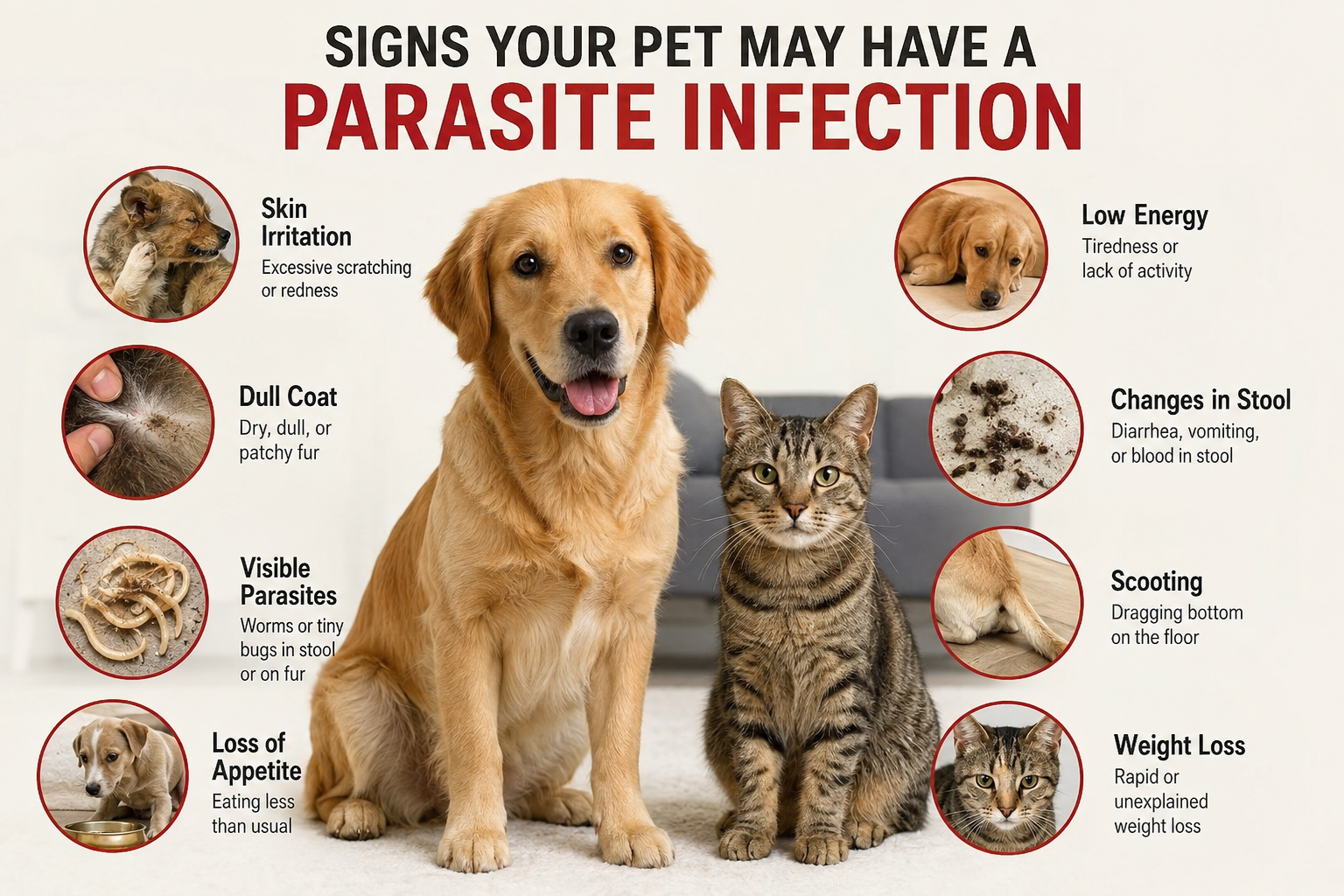
Pets bring happiness, comfort, and companionship into our lives, but they can also face health problems that are not always easy to notice. One common concern among pet owners is parasite infection. Parasites can affect dogs, cats, puppies, kittens, and other animals in different ways. Some parasites live inside the body, while others stay on the skin and feed on blood or other nutrients. If left untreated, a parasite infection can cause discomfort and may lead to more serious health problems.
Knowing the common signs of parasite infection can help pet owners take action early. Changes in appetite, weight, digestion, skin condition, energy levels, and behavior may all indicate that something is wrong. In this article, we will discuss the important signs your pet may have a parasite infection, the most common types of parasites, and what you can do to protect your pet.
What Is a Parasite Infection in Pets?
A parasite infection occurs when an organism lives on or inside your pet and depends on the animal for food or survival. Parasites can affect different parts of the body. Some live in the intestines, while others can affect the blood, skin, lungs, or other organs.
Common internal parasites include roundworms, hookworms, tapeworms, and whipworms. Heartworms are another serious type of parasite that can affect the heart and lungs, especially in dogs. External parasites include fleas, ticks, mites, and lice.
Parasite infections are common in pets, especially animals that spend time outdoors. However, indoor pets are not completely protected. Parasites can enter the home through shoes, clothing, other animals, contaminated surfaces, or insects.
Changes in Appetite
One of the first signs of a parasite infection can be a change in your pet’s appetite. Some pets may suddenly become less interested in food, while others may seem unusually hungry.
Certain intestinal parasites take nutrients from the digestive system, which can make your pet feel hungry even after eating. At the same time, the infection may prevent the body from properly absorbing important nutrients.
If your pet’s eating habits change without an obvious reason, pay attention to other symptoms as well. A temporary change may not always be serious, but ongoing appetite changes should be discussed with a veterinarian.
Unexplained Weight Loss
Unexplained weight loss is another important warning sign of parasite infection in pets. A pet may continue eating normally but still lose weight because parasites interfere with nutrient absorption.
Weight loss can be particularly concerning in puppies, kittens, older pets, and animals with weak immune systems. If you notice that your pet’s ribs, spine, or hips are becoming more visible, do not ignore the change.
There are many possible causes of weight loss, including digestive problems, infections, metabolic conditions, and dental issues. A veterinarian can determine whether parasites are responsible.
Vomiting and Diarrhea
Digestive problems are common symptoms of intestinal parasites. An infected pet may experience vomiting, diarrhea, soft stools, or frequent bowel movements.
Some pets may have occasional digestive upset, but repeated vomiting or diarrhea can indicate a more serious problem. In some cases, you may notice mucus or blood in the stool.
Puppies and kittens can become dehydrated quickly when they have severe diarrhea or vomiting. This makes early veterinary attention especially important.
If your pet has persistent digestive problems, avoid assuming that it is simply something they ate. Parasites are one possible cause that should be considered.
Changes in Stool
Your pet’s stool can provide useful information about their health. Changes in stool color, consistency, smell, or appearance may sometimes indicate a parasite infection.
Some intestinal parasites can be seen in the stool. Tapeworm infections, for example, may produce small segments that look similar to grains of rice around the anus or in fresh stool.
Roundworms can sometimes appear as long, pale worms in vomit or stool. However, many parasites are too small to see with the naked eye. A normal looking stool does not always mean that your pet is free from parasites.
Regular veterinary examinations and fecal testing can help identify infections that are not obvious at home.
Excessive Scratching and Skin Irritation
External parasites often cause noticeable skin problems. Fleas are one of the most common causes of excessive scratching in dogs and cats.
An affected pet may scratch, bite, lick, or chew certain areas of the body repeatedly. You may notice redness, small bumps, scabs, hair loss, or irritated skin.
Flea infestations can be especially uncomfortable because even a small number of fleas may cause significant itching in sensitive animals. Pets can also develop flea allergy dermatitis, a reaction to flea saliva.
Ticks can also cause skin irritation and may transmit diseases. Checking your pet’s skin and coat regularly is an important part of parasite prevention.
Hair Loss and Poor Coat Condition
A healthy pet usually has a smooth and reasonably clean coat. Parasite infections can sometimes cause the coat to become dull, dry, greasy, or uneven.
Repeated scratching and licking can lead to hair loss. Fleas, mites, and other external parasites can damage the skin and create areas of thinning fur.
Internal parasites can also contribute indirectly to poor coat quality because they may interfere with nutrient absorption. If your pet’s coat suddenly looks unhealthy, consider it a reason to investigate their overall health.
Low Energy and Weakness
Parasite infections can make pets tired and less active. An animal that normally enjoys playing may begin sleeping more or showing less interest in normal activities.
Some parasites can cause blood loss. Hookworms, for example, can consume blood from the intestinal tract and may contribute to anemia. An anemic pet may appear weak, tired, or pale around the gums.
Heartworm infection can also cause reduced stamina, coughing, and breathing difficulties in affected animals. These symptoms should never be ignored because heartworm disease can become life threatening.
Pale Gums
Checking your pet’s gums can sometimes help you notice a health problem. Healthy gums are usually pink, although normal gum color can vary slightly between individual animals.
Pale or whitish gums may be a sign of anemia or another serious condition. Certain parasites, particularly blood feeding intestinal parasites, can contribute to anemia.
If your pet has pale gums along with weakness, poor appetite, vomiting, diarrhea, or weight loss, contact a veterinarian promptly.
A Bloated or Swollen Belly
A swollen belly can sometimes occur in puppies and kittens with heavy worm infections. Roundworms, for example, may cause a characteristic potbellied appearance in young animals.
However, a swollen abdomen can have many causes, including digestive problems and other medical conditions. It should not automatically be blamed on worms.
Young pets are particularly vulnerable to intestinal parasites because their immune systems are still developing. Routine deworming and veterinary examinations can help protect puppies and kittens from serious complications.
Scooting and Excessive Licking
If your dog or cat frequently drags their bottom across the floor, parasites may be one possible explanation. Pets may also lick or bite the area around their anus.
Tapeworm segments can cause irritation around the anus, leading to scooting or increased licking. Fleas can also be involved because they can carry certain types of tapeworm.
Scooting can also occur because of anal gland problems, skin irritation, or allergies. For this reason, it is important to have the underlying cause identified rather than treating the symptom alone.
Coughing or Breathing Problems
Not all parasite infections affect the digestive system. Some parasites can affect the respiratory system or travel through the bloodstream to important organs.
Heartworm disease is a serious example. In dogs, adult heartworms can live in the heart and major blood vessels and may eventually cause coughing, breathing problems, tiredness, and reduced ability to exercise.
Cats can also be affected by heartworms, although the disease can appear differently. Because heartworm disease can cause serious damage before obvious symptoms develop, prevention is extremely important.
Visible Parasites or Eggs
Sometimes parasite infections are easy to identify because you can see the parasites themselves. Fleas may be visible moving through the fur, while ticks can often be found attached to the skin.
You may also notice tiny dark particles in your pet’s coat. These can sometimes be flea dirt, which is digested blood left behind by fleas.
Worms or worm segments may occasionally be visible in vomit or stool. However, many parasite infections cannot be identified simply by looking at your pet.
How Veterinarians Diagnose Parasite Infections
If you suspect your pet has parasites, a veterinarian can perform a physical examination and recommend appropriate tests. A fecal examination is commonly used to look for evidence of intestinal parasites.
Depending on the symptoms, the veterinarian may recommend blood tests, skin tests, or other diagnostic procedures. Heartworm testing is particularly important for dogs and may also be recommended for cats based on their risk.
Accurate diagnosis helps ensure that your pet receives the right treatment. Different parasites require different medications, so using a random deworming product may not solve the problem.
How to Prevent Parasite Infections
Prevention is one of the best ways to protect your pet from parasites. Regular veterinary checkups can help identify risks and keep preventive care up to date.
Use veterinarian recommended flea, tick, and parasite prevention products according to the instructions. Keep your pet’s living area clean and remove feces from the yard regularly.
Avoid allowing your pet to eat unknown substances outdoors or drink from potentially contaminated water sources. Puppies and kittens should receive appropriate parasite control as recommended by their veterinarian.
Good hygiene also matters. Wash your hands after handling animal waste and keep food and water bowls clean.
When to Contact a Veterinarian
You should contact a veterinarian if your pet develops persistent vomiting, diarrhea, weight loss, weakness, pale gums, severe itching, breathing problems, or major changes in appetite or behavior.
Emergency veterinary care may be needed if your pet has difficulty breathing, collapses, becomes extremely weak, has severe bleeding, or appears seriously ill.
Early diagnosis can make parasite infections easier to manage and may prevent complications. Never give human medication or parasite treatment to your pet without veterinary guidance.
Final Thoughts
Parasite infections are common health problems in dogs and cats, but they should never be ignored. Symptoms such as weight loss, diarrhea, vomiting, excessive scratching, hair loss, weakness, pale gums, scooting, and changes in appetite can indicate that your pet needs medical attention.
Some parasites are easy to notice, while others can remain hidden inside the body for a long time. Regular veterinary care, appropriate parasite prevention, good hygiene, and attention to changes in your pet’s behavior can greatly reduce the risk.
If you notice signs your pet may have a parasite infection, the safest approach is to speak with a veterinarian. With early detection and proper treatment, most parasite infections can be managed effectively, helping your pet stay healthy, comfortable, and active.