
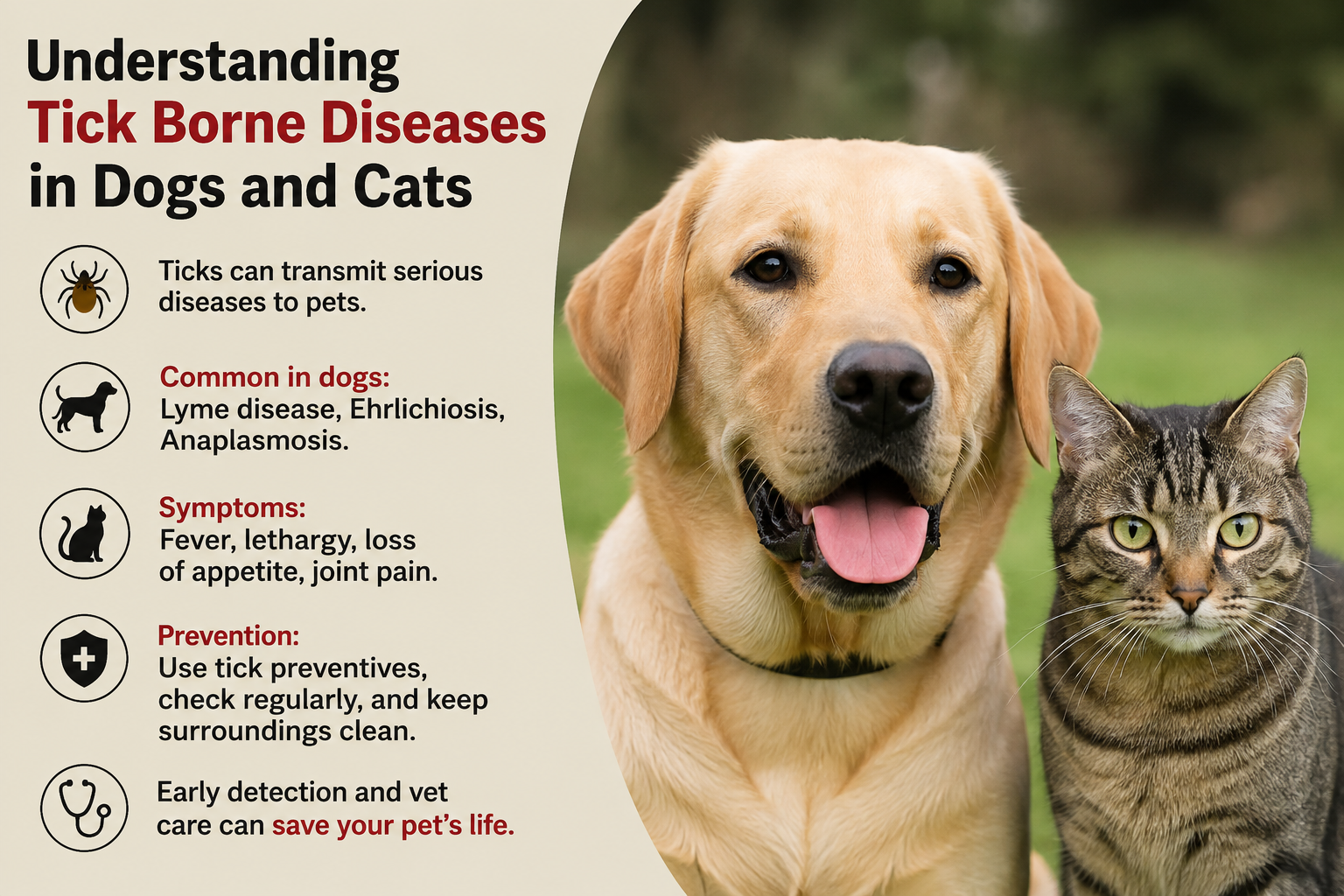
Tick borne diseases in dogs and cats are a growing concern for pet owners because ticks can carry harmful bacteria, parasites, and other organisms that may cause serious health problems. These tiny parasites attach themselves to animals and feed on their blood. During this process, they can transmit infections that affect the blood, immune system, joints, organs, and overall health of a pet.
Many pet owners do not notice a tick bite because ticks can be very small and may hide under thick fur. Some infected pets may also show mild symptoms at first, making the disease difficult to recognize. Understanding tick borne diseases in dogs and cats, their symptoms, causes, treatment options, and prevention methods can help pet owners protect their animals and seek veterinary care when necessary.
What Are Tick Borne Diseases?
Tick borne diseases are infections that can be transmitted to animals through the bite of an infected tick. Ticks become infected when they feed on an infected animal. When the same tick later attaches to another animal, it can transfer the infection through its saliva.
Dogs are commonly affected by several tick borne illnesses, including ehrlichiosis, anaplasmosis, babesiosis, and Lyme disease. Cats can also develop certain tick borne infections, although some diseases are more common in dogs than cats.
The risk of tick borne disease depends on several factors. These include the geographical area, weather conditions, outdoor activity, and the number of ticks present in the environment. Pets that spend a lot of time outside, especially in grassy or wooded areas, may have a higher risk of encountering ticks.
Common Tick Borne Diseases in Dogs
Dogs can develop different illnesses after being bitten by infected ticks. One of the most recognized is ehrlichiosis. This disease is caused by bacteria that can affect blood cells and the immune system. Infected dogs may develop fever, tiredness, poor appetite, swollen lymph nodes, bruising, or bleeding problems.
Anaplasmosis is another common tick borne disease in dogs. It can cause fever, weakness, joint pain, loss of appetite, and lethargy. Some dogs may appear uncomfortable when walking because the infection can affect the joints.
Lyme disease is also associated with ticks. Dogs with Lyme disease may experience fever, swollen joints, lameness, tiredness, and reduced appetite. Some infected dogs may not show obvious symptoms for a long time, which makes regular veterinary examinations important.
Babesiosis is caused by microscopic parasites that can infect red blood cells. It may result in anemia, weakness, fever, pale gums, dark urine, and loss of appetite. In severe cases, babesiosis can become life threatening and requires immediate veterinary treatment.
Tick Borne Diseases in Cats
Cats can also be exposed to ticks, particularly those that spend time outdoors. However, cats may respond differently to tick borne infections than dogs. Some cats may show very few symptoms while others can become seriously ill.
Anaplasmosis and certain blood related infections have been reported in cats. Symptoms may include fever, tiredness, reduced appetite, pale gums, weakness, swollen lymph nodes, or changes in normal behavior.
Cats are naturally good at hiding signs of illness. This means a cat may appear normal even when an infection is developing. A small change in appetite, activity, grooming habits, or behavior can sometimes be an important warning sign.
Pet owners should check outdoor cats regularly for ticks and speak with a veterinarian about safe tick prevention products. It is important to remember that some products designed for dogs can be dangerous or even toxic to cats. Never use a dog tick treatment on a cat unless it has been specifically approved for cats by a veterinarian.
How Do Ticks Affect Pets?
Ticks attach to a pet’s skin and feed on blood. Depending on the species and stage of development, a tick may remain attached for several days. During feeding, an infected tick can transmit disease causing organisms to the animal.
A tick bite itself can cause skin irritation, redness, swelling, or discomfort. Heavy tick infestations can lead to significant blood loss, especially in small animals or young pets. Ticks may also create wounds that can become infected.
The bigger concern, however, is the transmission of disease. Some tick borne infections can affect the blood and immune system, while others can cause inflammation in the joints or damage internal organs. Early diagnosis and treatment can reduce the risk of serious complications.
Symptoms of Tick Borne Diseases in Dogs and Cats
The symptoms of tick borne diseases can vary depending on the infection and the individual animal. Some common warning signs include fever, tiredness, weakness, reduced appetite, swollen lymph nodes, joint pain, difficulty walking, vomiting, weight loss, pale gums, and unusual bleeding.
A pet may also become less interested in playing or interacting with family members. Dogs may develop sudden lameness or appear stiff when moving. Cats may hide more often or stop grooming themselves normally.
In some cases, symptoms can develop weeks after a tick bite. This delayed appearance makes it difficult for owners to connect the illness with a previous tick encounter. For this reason, pet owners should tell their veterinarian if their animal has recently had contact with ticks or spends time outdoors.
How Are Tick Borne Diseases Diagnosed?
Veterinarians use several methods to diagnose tick borne diseases. The first step is usually a physical examination and discussion of the pet’s symptoms, lifestyle, and possible exposure to ticks.
Blood tests are often important because many tick borne infections affect blood cells or other parts of the body. A veterinarian may recommend specific tests that look for antibodies, antigens, or genetic material associated with certain infections.
In some cases, additional blood work may be needed to check red blood cells, white blood cells, platelets, liver function, kidney function, or signs of inflammation. Early testing can help a veterinarian determine the most appropriate treatment.
Because some infections can be difficult to identify during the early stages, follow up testing may sometimes be necessary. Pet owners should follow their veterinarian’s recommendations even if symptoms initially improve.
Treatment for Tick Borne Diseases
Treatment depends on the specific disease and how severely the pet is affected. Bacterial infections are often treated with antibiotics prescribed by a veterinarian. Some pets may begin feeling better relatively quickly, but completing the full treatment plan is important.
Pets with severe infections may require additional supportive care. This can include fluids, nutritional support, medication for pain or inflammation, or treatment for anemia and other complications.
Babesiosis and other serious blood related infections may require more intensive veterinary care. In severe cases, hospitalization or blood transfusion may be necessary.
Pet owners should never give human medication to a sick dog or cat without veterinary advice. Some human medicines can be extremely dangerous for animals. The safest approach is to have the pet examined and follow a treatment plan specifically designed for that animal.
How to Prevent Tick Borne Diseases in Pets
Preventing tick bites is one of the best ways to reduce the risk of tick borne diseases in dogs and cats. Veterinarians can recommend tick prevention products based on the pet’s species, age, weight, lifestyle, and health condition.
These products may include topical treatments, oral medications, collars, or other preventive options. The product should always be used according to veterinary instructions and the manufacturer’s directions.
Regular tick checks are also important. After outdoor activities, carefully examine your pet’s body, paying attention to areas around the ears, neck, legs, paws, belly, and between the toes. Ticks can hide in areas that are easy to miss.
If you find a tick attached to your pet, remove it carefully using an appropriate tick removal tool or ask a veterinarian for guidance. Avoid crushing or squeezing the tick during removal. Afterward, wash your hands and clean the affected area.
Keeping the home and yard environment clean can also help reduce tick exposure. Regularly trimming grass, removing piles of leaves, and limiting access to areas with heavy tick activity may reduce the number of ticks your pet encounters.
Why Regular Veterinary Checkups Matter
Regular veterinary checkups are important even when a pet appears healthy. Some tick borne diseases can remain unnoticed for a period of time before causing obvious symptoms.
During routine visits, veterinarians can evaluate a pet’s overall health and discuss parasite prevention. Depending on the pet’s lifestyle and location, the veterinarian may also recommend screening for certain tick borne infections.
Early detection can make a significant difference. When an infection is identified before serious complications develop, treatment may be more effective and recovery may be easier.
Can Tick Borne Diseases Be Prevented Completely?
No prevention method can guarantee that a pet will never encounter a tick. However, consistent tick prevention can significantly reduce the risk. Combining veterinary approved prevention products with regular tick checks and sensible outdoor habits provides strong protection.
Pet owners should also understand that prevention needs to be consistent. Skipping preventive treatments can leave pets unprotected during periods when ticks are active. A veterinarian can help determine an appropriate schedule based on local conditions and the animal’s lifestyle.
Final Thoughts
Understanding tick borne diseases in dogs and cats is an important part of responsible pet ownership. Ticks may be tiny, but they can transmit infections that cause serious health problems. Dogs and cats that spend time outdoors can be exposed without their owners realizing it.
Knowing the common symptoms of tick borne diseases, checking pets regularly, using appropriate tick prevention, and maintaining routine veterinary care can help protect animals from these infections. If a pet develops unexplained fever, weakness, loss of appetite, joint problems, unusual bleeding, or changes in behavior after possible tick exposure, veterinary advice should be sought promptly.
The best approach to tick borne disease is prevention combined with awareness. By making tick control part of regular pet care, owners can reduce the chances of infection and help their dogs and cats enjoy healthier and more active lives.