
Worm infections are one of the most common health problems that affect dogs and cats. Many pet owners do not realize that their pets can have worms even when they look healthy from the outside. Worms can live inside the digestive system, lungs, heart, or other parts of the body and may cause different health problems depending on the type of infection. Some worm infections are mild, while others can become serious and even life threatening if they are not treated.
Understanding how worm infections affect dogs and cats can help pet owners recognize warning signs early and take better care of their pets. Regular veterinary checkups, proper hygiene, parasite prevention, and timely treatment can greatly reduce the risk of complications. This article explains the common types of worms, their symptoms, causes, treatment options, and ways to protect pets from worm infections.
What Are Worm Infections in Dogs and Cats?
Worm infections occur when a dog or cat becomes infected with parasitic worms. These parasites live inside or sometimes on the body of the animal and obtain nutrients from their host. Different worms affect different organs and can cause problems ranging from digestive discomfort to severe organ damage.
Dogs and cats can become infected by swallowing worm eggs or larvae, eating infected animals, drinking contaminated water, or coming into contact with contaminated soil. Some worms can also be passed from a mother to her puppies or kittens. In certain cases, parasites can enter the body through the skin.
Because many worm infections do not show obvious symptoms during the early stages, regular parasite screening is important. A pet may continue eating and playing normally while worms are already affecting its health.
Common Types of Worms in Dogs and Cats
Several types of worms can infect pets. The most common intestinal worms include roundworms, hookworms, whipworms, and tapeworms.
Roundworms are particularly common in puppies and kittens. They live in the intestines and consume nutrients that the pet needs for healthy growth. Heavy roundworm infections can cause a swollen abdomen, poor growth, vomiting, diarrhea, and weight loss.
Hookworms are small parasites that attach themselves to the intestinal lining and feed on blood. They can cause serious blood loss, especially in young puppies and kittens. Pale gums, weakness, poor appetite, and anemia can occur when the infection becomes severe.
Whipworms mainly affect dogs and can cause diarrhea, weight loss, dehydration, and abdominal discomfort. Cats are less commonly affected by this type of parasite.
Tapeworms are long, flat parasites that live in the intestines. Dogs and cats often become infected with tapeworms by swallowing infected fleas or eating infected animals. Pet owners may notice small segments that look like grains of rice around the pet’s tail or in its stool.
Heartworms are another serious type of parasite. Unlike many intestinal worms, heartworms live in the heart and major blood vessels. They are spread through mosquito bites and can cause serious heart and lung problems, particularly in dogs.
How Worm Infections Affect Pet Health
Worm infections can affect dogs and cats in several ways. The impact depends on the type of worm, the number of parasites, the age of the pet, and its overall health.
One of the most common effects is poor nutrition. Worms compete with pets for nutrients, which can prevent normal growth and cause weight loss. Puppies and kittens are especially vulnerable because they need a large amount of nutrition during their early development.
Worms can also damage the digestive system. Infected pets may experience vomiting, diarrhea, constipation, gas, abdominal pain, or changes in appetite. Some animals may eat more than usual while still losing weight because parasites are taking nutrients from their food.
Blood loss is another major concern. Hookworms can consume enough blood to cause anemia, especially in young or weak animals. Severe anemia can make a pet extremely tired and weak and may require urgent veterinary treatment.
Some parasites can also affect organs outside the digestive system. Heartworms can damage the heart, lungs, and blood vessels. In serious cases, untreated heartworm disease can lead to heart failure and death.

Signs of Worm Infections in Dogs
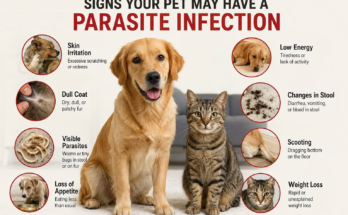
The symptoms of worm infections in dogs can vary depending on the parasite. Some common warning signs include weight loss, diarrhea, vomiting, a swollen abdomen, coughing, weakness, poor coat condition, and changes in appetite.
A dog with a heavy worm infection may appear tired and less interested in normal activities. Puppies may fail to grow properly and may have a noticeably round or swollen belly.
Another possible sign is visible worms or worm segments in the stool or around the anus. However, not all worm infections produce visible parasites. This is why pet owners should not assume that a dog is free from worms simply because nothing unusual can be seen.
If a dog develops pale gums, severe weakness, persistent vomiting, bloody diarrhea, breathing problems, or sudden weight loss, veterinary attention should be sought quickly.
Signs of Worm Infections in Cats
Cats can also develop several types of worm infections. Common symptoms include vomiting, diarrhea, weight loss, poor appetite, dull fur, abdominal swelling, coughing, and reduced energy.
Kittens can be particularly vulnerable to intestinal worms. A heavy infection may interfere with their growth and development. Some kittens may have a swollen belly even though the rest of their body appears thin.
Cats may sometimes drag their rear end across the floor because of irritation around the anus. Small white worm segments may also be visible around the tail area or in fresh stool when tapeworms are present.
Respiratory symptoms such as coughing or difficulty breathing can occur with certain parasites. Because these symptoms can also be caused by other illnesses, a veterinarian should examine the cat to determine the actual cause.
How Dogs and Cats Get Worms
Pets can become infected with worms in several ways. One common route is contact with contaminated soil or feces. Worm eggs can remain in the environment and may be swallowed when pets lick their paws or investigate contaminated areas.
Fleas can also play an important role in the spread of tapeworms. When cats or dogs groom themselves, they may accidentally swallow an infected flea.
Dogs and cats that hunt or eat rodents, birds, or other small animals can also become exposed to parasites. Puppies and kittens may receive certain worms from their mothers during pregnancy or through nursing.
Mosquitoes are responsible for spreading heartworm larvae. A mosquito can bite an infected animal and then transmit the parasite to another dog or cat.
Diagnosis of Worm Infections
Veterinarians use different methods to diagnose worm infections. A stool examination is commonly used to identify intestinal parasites. During this test, a small sample of feces is examined for worm eggs or other signs of parasites.
In some cases, additional tests may be needed. Blood tests can help detect certain infections, including heartworm disease. Imaging tests may also be recommended when a veterinarian suspects that parasites have affected the heart, lungs, or other organs.
Because some parasites may not release eggs continuously, one negative stool test does not always guarantee that a pet is completely free from worms. Veterinarians may recommend repeated testing based on the pet’s age, lifestyle, and risk level.
Treatment for Worm Infections
Treatment depends on the type of worm and the severity of the infection. Veterinarians may prescribe deworming medication designed to target specific parasites. Some treatments require more than one dose because certain parasites have different life stages.
It is important to use medication recommended specifically for the pet. Dog and cat medications are not always interchangeable, and giving the wrong product or incorrect dose can be dangerous.
Pets with severe infections may need additional care. For example, a pet suffering from anemia or dehydration may require supportive treatment along with parasite medication.
Pet owners should follow the veterinarian’s instructions carefully and complete the recommended treatment. Stopping treatment too early can allow parasites to survive and cause another infection.
How to Prevent Worm Infections
Preventing worm infections is usually easier than dealing with serious parasite disease. Regular veterinary checkups can help identify infections before they become severe.
Pet owners should follow a suitable parasite prevention program recommended by a veterinarian. Depending on the pet’s lifestyle and location, this may include regular deworming and heartworm prevention.
Good hygiene is also important. Pet waste should be removed from yards, litter boxes, and other areas regularly. Washing hands after handling animal waste can reduce the risk of spreading parasites.
Flea control is especially important because fleas can transmit tapeworms. Keeping pets protected from fleas can therefore reduce more than one type of parasite risk.
Pets should also be discouraged from eating unknown animals or drinking from potentially contaminated water sources. Keeping living areas clean can further reduce exposure to parasite eggs and larvae.
Can Worm Infections Affect Humans?
Some worms that infect dogs and cats can also affect humans. This is known as a zoonotic infection. Children are particularly vulnerable because they may spend time playing in soil and may not always wash their hands properly.
Good hygiene can significantly reduce the risk. Washing hands after touching pets, cleaning litter boxes, gardening, or handling animal waste is an important habit.
Pet owners should also keep their pets on an appropriate parasite prevention program. Regular veterinary care protects both animals and the people who live with them.
When to Visit a Veterinarian
Pet owners should contact a veterinarian if they notice persistent vomiting, diarrhea, unexplained weight loss, weakness, pale gums, a swollen abdomen, coughing, breathing difficulties, or visible worms.
Young puppies and kittens require particular attention because parasites can affect their growth quickly. Pets with severe symptoms should not be treated at home without professional advice.
Early diagnosis and treatment can prevent many complications. A veterinarian can identify the type of parasite and recommend the safest treatment based on the pet’s age, size, health, and lifestyle.
Final Thoughts
Worm infections in dogs and cats are common, but they should never be ignored. Parasites can cause digestive problems, poor nutrition, weight loss, anemia, organ damage, and other serious health complications. Young pets are especially vulnerable, while heartworm infections can become dangerous when left untreated.
The good news is that many worm infections can be prevented or successfully treated. Regular veterinary examinations, parasite prevention, good hygiene, flea control, and responsible pet care can protect dogs and cats from many common parasites.
Knowing the warning signs of worm infections allows pet owners to act quickly when something seems wrong. If you notice changes in your pet’s appetite, weight, energy, digestion, or appearance, speaking with a veterinarian is the safest choice. With proper prevention and timely care, dogs and cats can stay healthier, happier, and protected from the harmful effects of worm infections.