Dogs can develop different skin problems throughout their lives. Some skin conditions are mild and disappear with proper care, while others can become serious if they are not treated on time. Skin diseases in dogs can cause itching, redness, hair loss, dry skin, sores, bad odor, and discomfort. Because dogs cannot tell us exactly what is bothering them, pet owners need to pay attention to changes in their skin and behavior.
Understanding the common skin diseases in dogs and their causes can help owners notice problems early. Many skin conditions have similar symptoms, so it is important to identify the possible cause before choosing a treatment. In this article, we will discuss common dog skin diseases, their causes, symptoms, and ways to protect your dog from skin problems.
Why Do Dogs Develop Skin Diseases?
A dog’s skin is an important protective barrier that helps keep the body safe from infections, parasites, and environmental factors. When this barrier becomes weak or damaged, different skin problems can develop. Some dogs are more likely to experience skin diseases because of their breed, age, genetics, or lifestyle.
Common causes of skin problems in dogs include allergies, fleas, mites, bacteria, fungi, poor nutrition, hormonal problems, and environmental irritants. Dogs that spend a lot of time outdoors may also come into contact with plants, insects, dirt, and other substances that can irritate their skin.
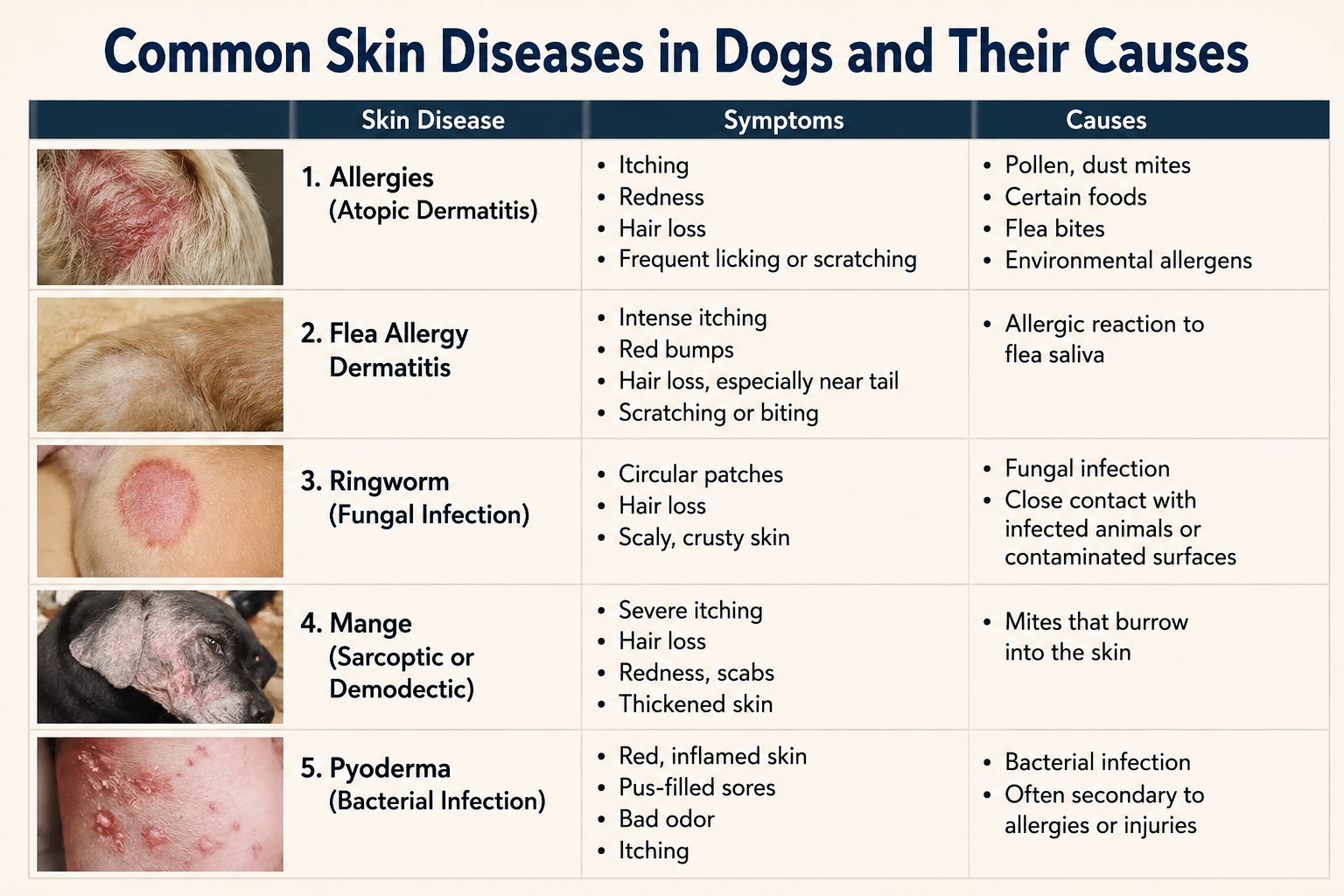
Flea Allergy Dermatitis
Flea allergy dermatitis is one of the most common skin conditions in dogs. It happens when a dog has an allergic reaction to proteins found in flea saliva. Even a small number of flea bites can cause intense itching in a sensitive dog.
Dogs with flea allergy dermatitis often scratch, bite, or lick the skin around their tail, lower back, thighs, and abdomen. Redness, small bumps, scabs, and hair loss may also appear. Constant scratching can damage the skin and create an opportunity for bacterial infections.
The best way to prevent flea allergy dermatitis is to maintain regular flea control. Your veterinarian can recommend an appropriate flea prevention product based on your dog’s age, size, and health.
Food Allergies
Food allergies can also cause skin problems in dogs. Some dogs develop an immune reaction to certain ingredients in their diet. Common food allergens may include proteins such as beef, chicken, dairy products, or other ingredients.
A dog with a food allergy may experience constant itching, especially around the ears, paws, face, and belly. Repeated ear infections can also occur. Some dogs may develop digestive symptoms at the same time.
Identifying a food allergy can take time. Veterinarians may recommend a controlled elimination diet to determine which ingredient is causing the reaction. Changing food randomly is usually not the best way to identify an allergy because several ingredients may be involved.
Environmental Allergies
Environmental allergies are another common cause of itchy skin in dogs. Dogs can react to pollen, dust mites, mold, grass, and other substances found in their surroundings. This condition is sometimes called atopic dermatitis.
Dogs with environmental allergies often lick and chew their paws or scratch their face, ears, and body. Symptoms may become worse during certain seasons when pollen levels are higher.
Although environmental allergies may not always be completely eliminated, their symptoms can often be managed. Regular bathing, keeping the dog’s living area clean, and following a veterinarian recommended treatment plan can help reduce discomfort.
Bacterial Skin Infections
Bacterial skin infections can develop when harmful bacteria multiply on damaged or irritated skin. They may occur after excessive scratching caused by allergies, parasites, or other skin conditions.
Symptoms can include red skin, small pimples, crusts, sores, hair loss, and an unpleasant smell. Some dogs may become very uncomfortable and scratch the affected areas repeatedly.
Bacterial infections usually require proper veterinary diagnosis. Treatment may involve medications prescribed by a veterinarian. It is important to treat the underlying cause as well, because an infection can return if the original skin problem is not controlled.
Fungal Infections and Ringworm
Ringworm is a fungal infection that can affect the skin, hair, and sometimes the nails of dogs. Despite its name, ringworm is not caused by a worm. It can produce circular areas of hair loss, dry skin, redness, and scaling.
Ringworm is particularly important because it can spread between animals and humans. Puppies, older dogs, and dogs with weakened immune systems may be more vulnerable to fungal infections.
If you notice unusual circular patches of hair loss or crusty skin, it is best to contact a veterinarian. Proper diagnosis is important because several other skin conditions can look similar to ringworm.
Mange Caused by Mites
Mange is a skin disease caused by microscopic mites. Two common types are demodectic mange and sarcoptic mange. These conditions are different and require different approaches to treatment.
Demodectic mange occurs when Demodex mites multiply excessively. It can cause hair loss, redness, and skin irritation. It is more common in young dogs, although adult dogs can also develop it.
Sarcoptic mange, also known as canine scabies, can cause severe itching, redness, crusting, and hair loss. It can spread between dogs and may also cause temporary skin irritation in humans who come into contact with an infected animal.
Veterinary testing is often needed to identify the type of mites involved and choose the correct treatment.
Dry Skin in Dogs
Dry skin is another common problem, especially during periods of cold or dry weather. However, dry skin can have many possible causes. Poor nutrition, excessive bathing, allergies, parasites, and certain health problems can all contribute to dry skin.
A dog with dry skin may have visible flakes, mild itching, dull hair, or rough skin. Using human shampoos can sometimes make the problem worse because they are not designed for a dog’s skin.
A balanced diet, appropriate bathing, good hydration, and proper grooming can support healthy skin. If dryness continues or is accompanied by severe itching or hair loss, a veterinary examination is recommended.
Hot Spots
Hot spots are moist, red, irritated areas that can appear suddenly on a dog’s skin. They are often caused by repeated licking, chewing, or scratching. Fleas, allergies, moisture, and skin infections can trigger this behavior.
Hot spots can grow quickly because dogs continue to irritate the affected area. They may become painful and develop discharge or an unpleasant odor.
Keeping the affected area clean and preventing the dog from licking it can help, but larger or infected hot spots may need veterinary treatment. Finding the original cause is also important to prevent future episodes.
Seborrhea in Dogs
Seborrhea is a condition that causes excessive scaling and oil production on the skin. Some dogs have a genetic tendency to develop seborrhea, while others develop it because of another health condition.
Symptoms may include greasy skin, dandruff, redness, itching, and a strong odor. The ears and areas with skin folds may also be affected.
Treatment depends on the cause. Medicated shampoos and other treatments may be recommended by a veterinarian. If seborrhea is caused by another disease, that underlying problem also needs attention.
Skin Problems Caused by Hormonal Conditions
Certain hormonal disorders can affect a dog’s skin and coat. Conditions involving the thyroid glands or adrenal glands may cause hair thinning, changes in skin texture, darkened skin, or repeated infections.
Unlike some allergic conditions, hormonal skin problems may not always cause severe itching at first. Owners may simply notice that their dog’s coat looks different or that hair is growing back slowly.
If unexplained hair loss continues, veterinary testing can help determine whether an underlying hormonal problem is responsible.
How to Prevent Skin Diseases in Dogs
Preventing every skin disease is not possible, but regular care can reduce many risks. Dogs should receive appropriate parasite prevention throughout the year. Regular grooming can help owners notice fleas, ticks, lumps, redness, sores, or unusual changes early.
A healthy and balanced diet is also important for maintaining good skin and coat condition. Dogs should have access to fresh water and should not be bathed too frequently unless recommended by a veterinarian.
Keeping bedding clean can reduce exposure to dirt and parasites. After outdoor activities, checking the paws, ears, and coat can also help identify problems before they become serious.
When Should You Visit a Veterinarian?
Some minor skin problems may improve with simple care, but persistent or severe symptoms should not be ignored. Contact a veterinarian if your dog has intense itching, significant hair loss, open wounds, swelling, bleeding, pus, a strong skin odor, or repeated skin infections.
You should also seek veterinary advice if your dog’s skin condition suddenly becomes worse or does not improve. Early diagnosis can make treatment easier and may prevent a small skin problem from becoming a more serious infection.
Final Thoughts
Common skin diseases in dogs can have many different causes, including allergies, fleas, mites, bacteria, fungi, environmental irritants, and underlying health conditions. Symptoms such as itching, redness, hair loss, dandruff, sores, and unpleasant odors should always be taken seriously, especially when they continue for several days.
The most effective way to protect your dog’s skin is to provide regular grooming, parasite prevention, a balanced diet, clean living conditions, and routine veterinary care. When a skin problem appears, avoid guessing the cause or using random medications. A veterinarian can help identify the underlying problem and recommend the right treatment.
Healthy skin is an important part of your dog’s overall health and comfort. By learning about the causes and warning signs of dog skin diseases, you can notice changes earlier and help your pet stay happy, comfortable, and healthy for years to come.