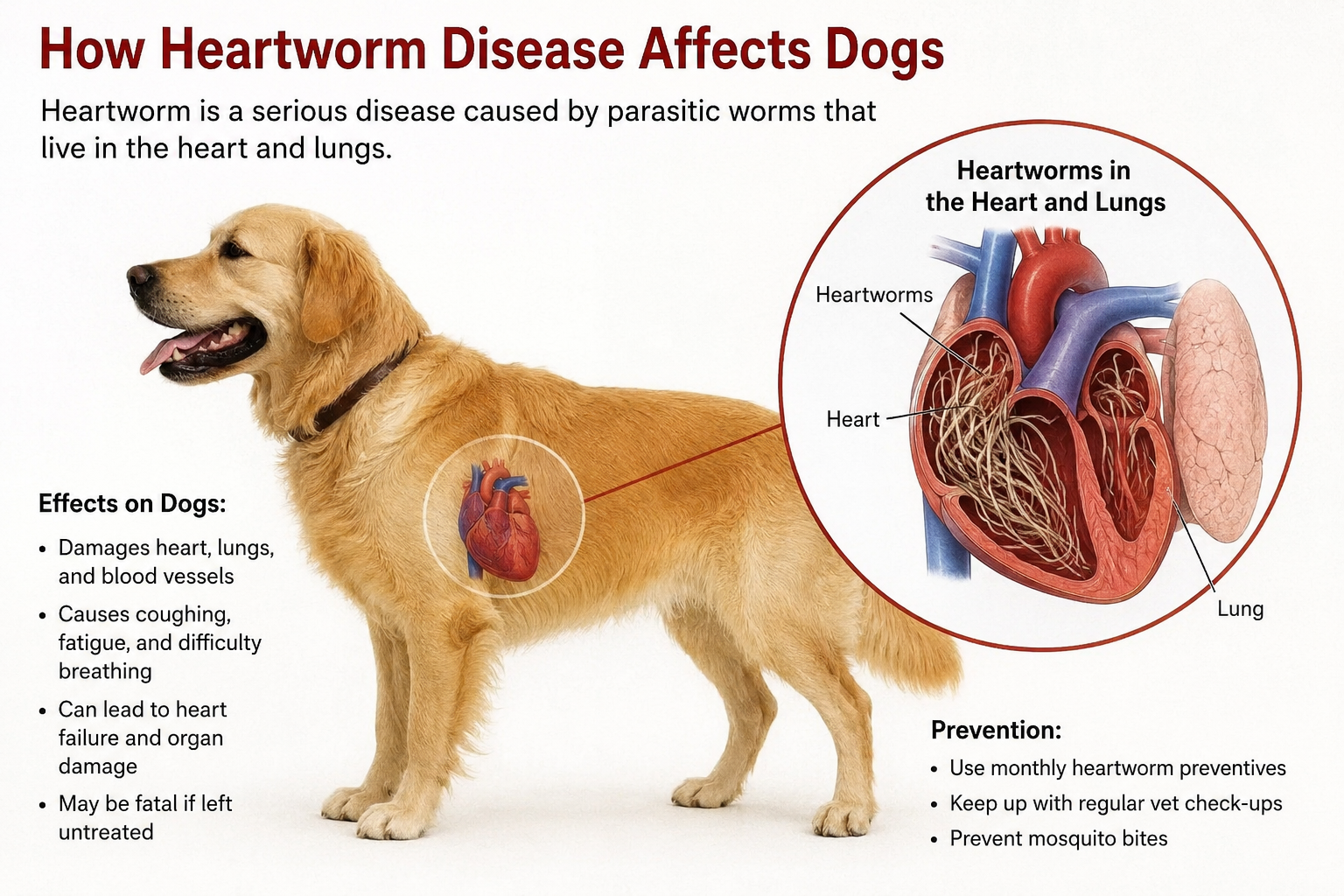
Heartworm disease is one of the most serious health problems that can affect dogs. It is caused by a parasite called Dirofilaria immitis, which is mainly spread through the bite of an infected mosquito. Many dog owners do not realize how dangerous heartworm disease can become because the infection may develop silently for months or even years. By the time noticeable symptoms appear, the dog’s heart, lungs, and blood vessels may already be seriously affected. Understanding how heartworm disease affects dogs can help pet owners recognize the risks, notice early warning signs, and take steps to protect their pets.
What Is Heartworm Disease in Dogs?
Heartworm disease in dogs is a parasitic infection that affects the cardiovascular and respiratory systems. The disease begins when a mosquito carrying heartworm larvae bites a dog. The tiny larvae enter the dog’s bloodstream and slowly develop into adult heartworms. Over several months, these worms travel toward the heart and nearby blood vessels.
Adult heartworms can grow to a significant length and may live inside a dog’s body for several years. As their numbers increase, they can interfere with normal blood circulation and place increasing pressure on the heart and lungs. This is why heartworm disease is considered a potentially life threatening condition.
One of the biggest concerns about heartworm disease is that infected dogs may look completely healthy during the early stages. Regular veterinary care and heartworm prevention are therefore extremely important.
How Do Dogs Get Heartworm Disease?
Mosquitoes play the main role in spreading heartworm disease. When a mosquito bites an infected animal, it can pick up microscopic heartworm larvae. If that mosquito later bites another dog, the larvae can enter the new dog’s bloodstream.
Heartworm disease is not normally spread directly from one dog to another through playing, sharing food, or casual contact. An infected mosquito is required for the parasite to complete its life cycle.
Because mosquitoes can be found in many different environments, dogs may be exposed even when they spend most of their time indoors. Warm and humid weather can increase mosquito activity, but the risk can vary depending on location and environmental conditions.
What Happens Inside a Dog’s Body?
After heartworm larvae enter a dog’s bloodstream, they gradually mature. The young parasites move through the body and eventually reach the blood vessels near the heart and lungs. Once they become adults, they can reproduce and create more microscopic larvae that circulate through the bloodstream.
As the number of worms increases, they can damage the lining of blood vessels and make it harder for blood to move normally. The heart must work harder to pump blood through affected vessels. Over time, this additional strain can weaken the heart.
The lungs can also be affected because heartworms live in the blood vessels that carry blood toward the lungs. Inflammation and damage to these vessels can reduce the efficiency of the respiratory system. This explains why coughing and breathing problems are common signs of advanced heartworm disease.
Early Signs of Heartworm Disease
Heartworm disease can be difficult to recognize in its early stages. Some dogs may show few or no obvious symptoms. A dog may continue eating, playing, and behaving normally while the infection is developing.
One of the earliest signs may be a mild and persistent cough. Some dogs may also become tired more easily during exercise. A dog that once enjoyed long walks may start slowing down or resting more frequently.
Other possible signs include reduced appetite, weight loss, and decreased energy. These symptoms can be associated with many other health conditions, so they should not automatically be assumed to mean heartworm disease.
If a dog develops an ongoing cough or suddenly has less energy than usual, it is important to consult a veterinarian. Early testing can help identify heartworm infection before severe damage develops.
Symptoms of Advanced Heartworm Disease
As heartworm disease progresses, symptoms can become much more serious. A dog may have difficulty breathing, especially after physical activity. Persistent coughing can become more noticeable, and the dog may struggle to maintain normal energy levels.
Weight loss can become significant, and some dogs may develop a swollen abdomen because of fluid buildup. Weakness and fainting may also occur when the heart is no longer able to circulate blood effectively.
In severe cases, dogs can develop a dangerous condition known as caval syndrome. This can happen when a large number of worms interfere with blood flow through the heart. It is a medical emergency that requires immediate veterinary attention.
Advanced heartworm disease can cause permanent damage to the heart and lungs. Unfortunately, some dogs may not recover completely even after the parasites are removed.
How Heartworm Disease Affects the Heart
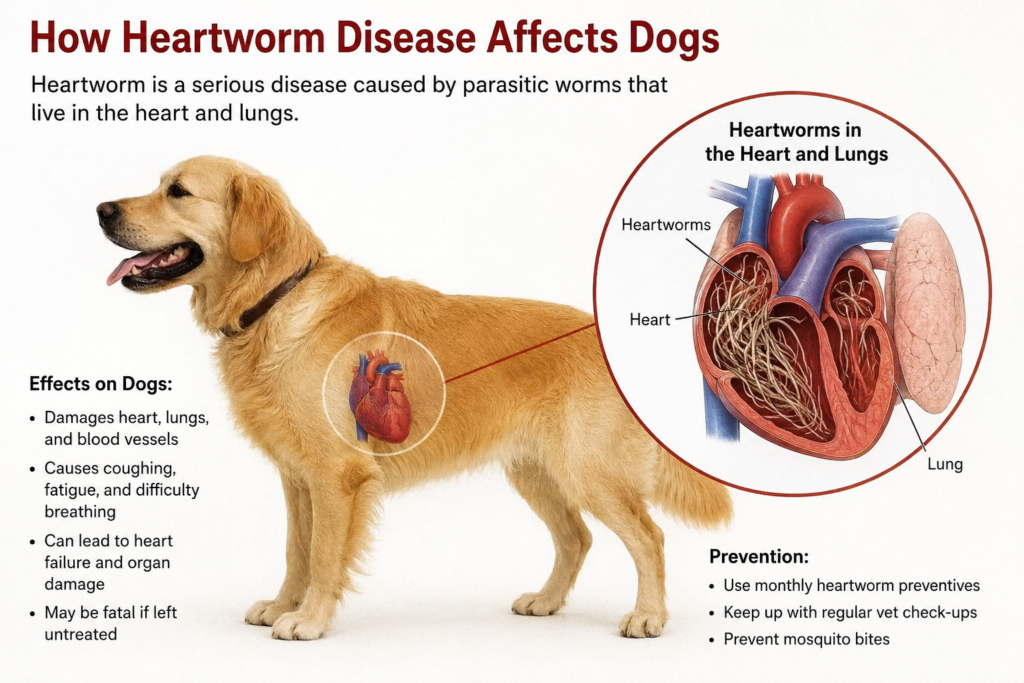
The heart is one of the main organs affected by heartworm infection. Adult worms can live in the blood vessels connected to the heart and create resistance to normal blood flow.
The heart may have to work harder to move blood through these damaged or obstructed vessels. Over time, this extra workload can cause the heart muscle to weaken. In serious cases, heart failure may develop.
A weakened heart can affect the entire body because organs and tissues depend on a steady supply of oxygen rich blood. This is why heartworm disease can eventually become a widespread health problem rather than an issue limited to the heart.
How Heartworm Disease Affects the Lungs
The lungs are also heavily affected by heartworm infection. The parasites can cause inflammation and damage in the pulmonary arteries, which are the blood vessels that carry blood from the heart to the lungs.
This damage can make breathing more difficult and may lead to persistent coughing. Some dogs may develop exercise intolerance because their lungs cannot efficiently support the body’s increased oxygen needs during activity.
In advanced cases, lung damage can become severe and may continue even after treatment. This is another reason why preventing heartworm disease is safer and easier than dealing with a serious infection later.
How Veterinarians Diagnose Heartworm Disease
Veterinarians commonly use blood tests to check dogs for heartworm infection. These tests can identify evidence of adult female heartworms. Depending on the dog’s condition, a veterinarian may recommend additional testing.
Further diagnostic procedures can include blood work, chest X rays, ultrasound examinations, or other tests to determine how severely the heart and lungs have been affected.
Regular heartworm testing is important because early infection may not cause obvious symptoms. A dog can appear healthy while parasites are developing inside the body.
Heartworm Treatment for Dogs
Heartworm treatment must be carefully managed by a veterinarian. The treatment process can be complicated because killing adult heartworms can create serious risks for a dog, especially when there is already significant heart or lung damage.
Veterinarians may first evaluate the dog’s overall condition before starting treatment. The treatment plan can include medication designed to eliminate adult heartworms, along with other medications and supportive care when necessary.
Exercise restriction is often an important part of treatment. When heartworms begin dying, fragments of the parasites can move through blood vessels and create dangerous complications. Keeping an infected dog calm and limiting physical activity can help reduce these risks.
Dog owners should never attempt to treat heartworm disease with unapproved medications or home remedies. Professional veterinary supervision is essential.
Preventing Heartworm Disease in Dogs
The best way to protect a dog from heartworm disease is prevention. Veterinarians can recommend approved heartworm preventive medications that are appropriate for a dog’s age, size, and health.
Many preventive medications are given on a regular schedule. Following the veterinarian’s instructions carefully is important because missing doses can leave a dog unprotected.
Regular heartworm testing should also be part of routine veterinary care. Even dogs receiving prevention may need testing because no preventive method provides a reason to ignore veterinary monitoring.
Reducing mosquito exposure can also help. Keeping dogs indoors during periods of high mosquito activity, using appropriate screens, and reducing standing water around the home can decrease opportunities for mosquitoes to bite.
Why Prevention Is Better Than Treatment
Heartworm prevention is generally much easier for dogs than treating an established infection. Once adult heartworms develop, they can cause serious damage before the owner notices any symptoms.
Treatment can also require veterinary monitoring, medication, rest, and careful activity restrictions. Dogs with advanced infections may face greater health risks during treatment.
Preventive care protects not only the dog’s heart but also the lungs and blood vessels. A simple conversation with a veterinarian about heartworm prevention can make a major difference in a dog’s long term health.
Final Thoughts
Heartworm disease can have a serious effect on a dog’s heart, lungs, blood vessels, and overall health. Because the infection can remain hidden during its early stages, waiting for symptoms is not a safe approach. Coughing, tiredness, weight loss, breathing difficulties, and reduced exercise tolerance can all be warning signs that deserve veterinary attention.
The good news is that heartworm disease is largely preventable. Regular veterinary checkups, appropriate heartworm prevention, routine testing, and efforts to reduce mosquito exposure can greatly lower the risk. Dog owners who understand how heartworm disease affects dogs are better prepared to protect their pets from this dangerous parasite and provide them with a healthier and longer life.