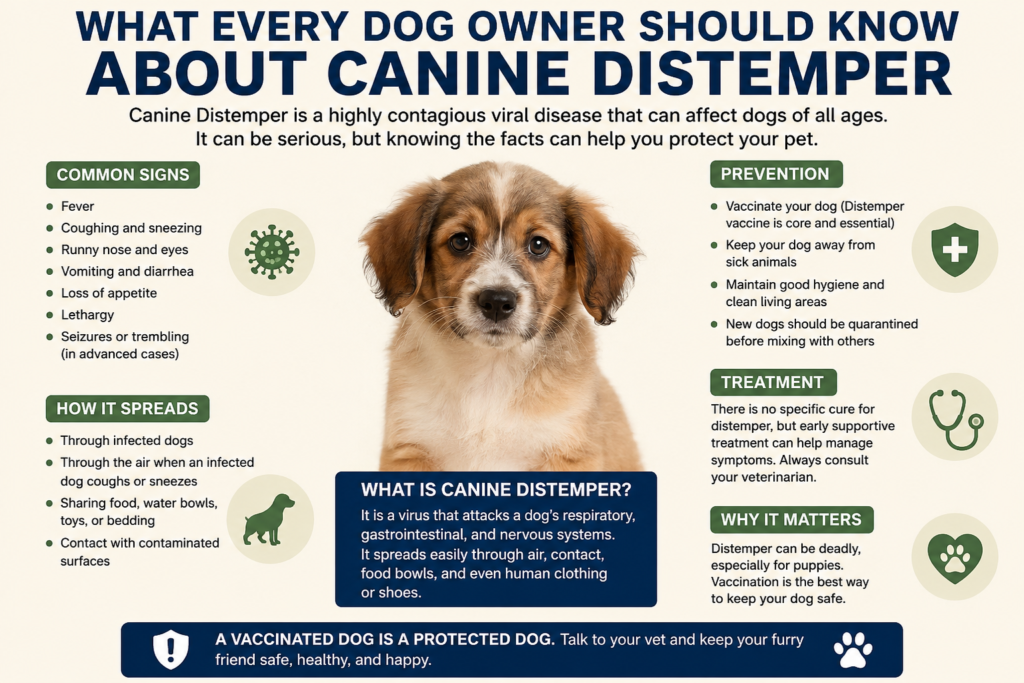
Canine distemper is one of the most serious diseases that can affect dogs. It is a highly contagious viral infection that can cause problems in the respiratory system, digestive system, and nervous system. Puppies and dogs that have not received proper vaccinations are especially vulnerable to this disease. Knowing the early signs of canine distemper can help dog owners take quick action and give their pets a better chance of recovery.
Many dog owners are not familiar with canine distemper until their pet becomes sick. The disease can spread easily between infected animals, and in severe cases it can become life threatening. Understanding how canine distemper spreads, what symptoms to watch for, how it is treated, and how it can be prevented is an important part of responsible dog ownership.
What Is Canine Distemper?
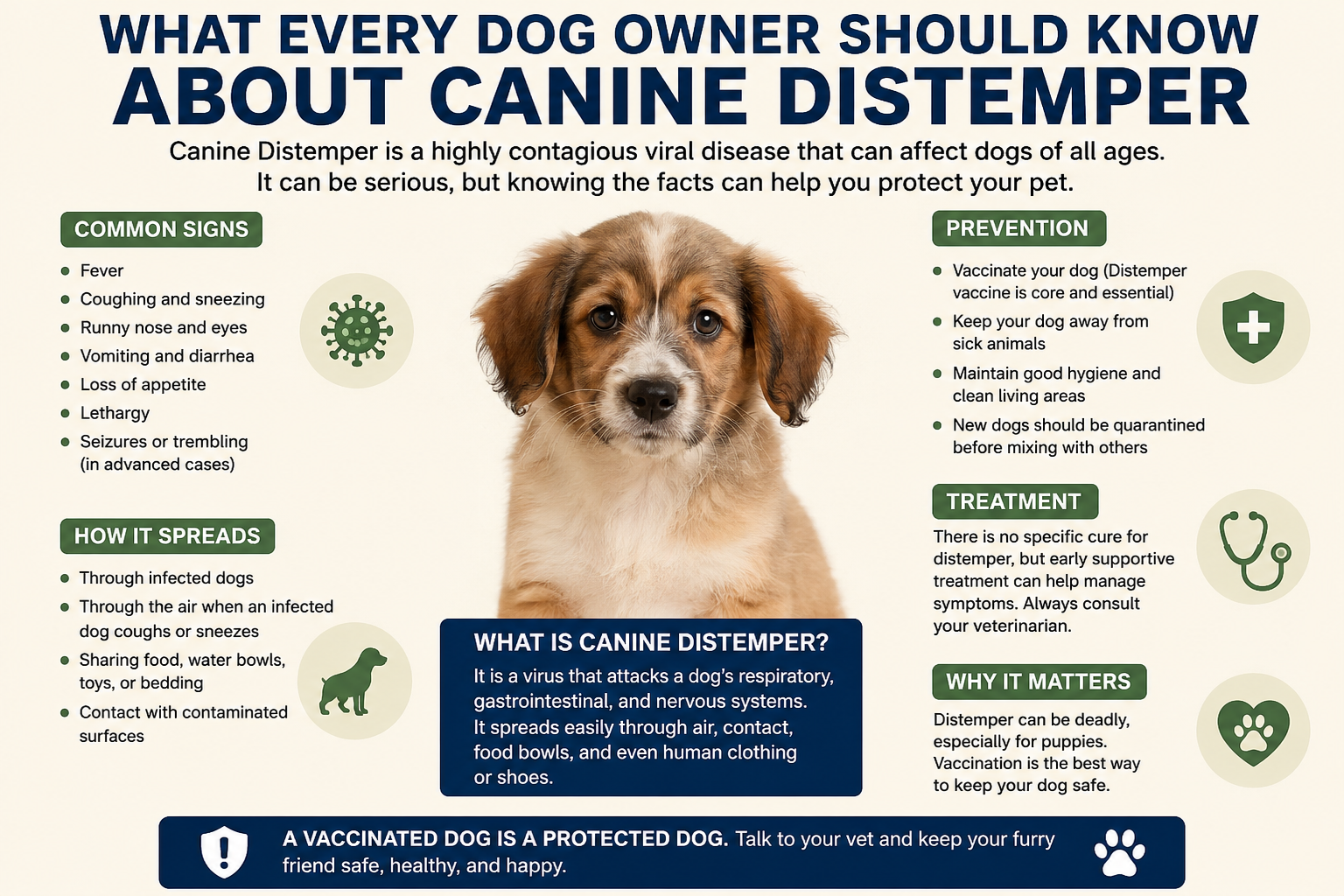
Canine distemper is caused by the canine distemper virus. It mainly affects dogs, especially young puppies, but other animals can also become infected. The virus attacks several parts of the body, which is why the symptoms can vary from one dog to another.
The disease can affect the lungs, stomach, intestines, and brain. Some dogs may develop mild symptoms while others can become seriously ill. In severe cases, canine distemper can cause permanent neurological problems even if the dog survives the infection.
Canine distemper is not the same as rabies, although both diseases can affect the nervous system. It is important for owners to recognize that distemper is a separate viral infection that requires veterinary attention.
How Does Canine Distemper Spread?
Canine distemper is highly contagious. An infected dog can spread the virus through respiratory droplets when coughing, sneezing, or barking. Close contact with an infected animal can therefore increase the risk of infection.
The virus may also spread through shared food and water bowls, bedding, toys, and other objects contaminated by an infected animal. Dogs that spend time in shelters, boarding facilities, dog parks, breeding facilities, or other places where many dogs are together may face a higher risk if vaccination is not properly maintained.
A dog may also spread the virus before the owner realizes that the animal is sick. This makes prevention particularly important. Keeping unvaccinated puppies away from unknown or sick dogs can reduce their risk of exposure.
Early Signs of Canine Distemper
Recognizing the early signs of canine distemper can make a major difference. The first symptoms may look similar to other common illnesses, so owners should pay close attention to changes in their dog’s behavior and health.
One of the first signs may be fever. A dog may become tired, less active, or less interested in playing. Loss of appetite is also common. Some dogs may develop watery eyes or a runny nose.
Coughing and sneezing can occur as the virus affects the respiratory system. The dog may appear uncomfortable while breathing or may develop a persistent cough. These symptoms can sometimes be mistaken for a simple cold, but they should not be ignored, especially when several symptoms appear together.
Vomiting and diarrhea may develop as the infection affects the digestive system. A sick dog may lose fluids quickly, which can lead to dehydration. Puppies can become particularly weak when they are unable to eat or drink normally.
Neurological Symptoms
One of the most concerning aspects of canine distemper is its ability to affect the nervous system. Neurological symptoms may appear later in the illness, although the timing can vary.
A dog may develop muscle twitching, unusual movements, weakness, poor coordination, or difficulty walking. Some dogs may experience seizures. Changes in behavior can also occur.
Neurological symptoms should always be treated as an emergency. A dog showing seizures, severe weakness, difficulty standing, or unusual muscle movements needs veterinary attention as soon as possible.
Some dogs that survive canine distemper may continue to experience neurological problems. This is one reason why early veterinary care and prevention are so important.
Which Dogs Are Most at Risk?
Although any unvaccinated dog can become infected, puppies are among the highest risk groups. Young dogs have developing immune systems and may not yet have completed their recommended vaccination series.
Dogs that have not been vaccinated or have an unknown vaccination history are also more vulnerable. Dogs living in areas with outbreaks or spending time around many other animals may have increased exposure.
A healthy adult dog that is properly vaccinated generally has much better protection against canine distemper. However, vaccination should be maintained according to a veterinarian’s recommendations because protection depends on appropriate timing and veterinary guidance.
How Is Canine Distemper Diagnosed?
Diagnosing canine distemper can be challenging because its symptoms can look like those of several other diseases. A veterinarian will usually consider the dog’s age, vaccination history, symptoms, and possible exposure to infected animals.
The veterinarian may perform a physical examination and recommend laboratory testing. Tests may be used to detect evidence of the virus or support the diagnosis. Blood tests and other diagnostic procedures may also help evaluate the dog’s overall condition.
Dog owners should never try to diagnose canine distemper at home. If a dog develops a combination of respiratory, digestive, or neurological symptoms, professional veterinary evaluation is important.
Treatment for Canine Distemper
There is currently no simple medication that directly eliminates canine distemper virus from the body. Treatment generally focuses on supporting the dog’s immune system and managing the symptoms and complications caused by the infection.
A veterinarian may provide fluids to help prevent dehydration. Nutritional support may also be necessary if the dog has difficulty eating. Medications may be used to control vomiting, diarrhea, seizures, or other symptoms when appropriate.
Dogs with secondary bacterial infections may require additional treatment based on veterinary assessment. In severe cases, hospitalization may be recommended so the dog can receive close monitoring and supportive care.
Recovery can take time. Some dogs recover fully, while others may experience long term effects, particularly if the nervous system has been seriously affected.
Why Vaccination Is So Important
Vaccination is the most important way to protect dogs against canine distemper. Puppies typically receive a series of vaccinations because their immune systems are still developing and protection from their mother can interfere with early vaccination.
The exact vaccination schedule should be determined by a veterinarian based on the dog’s age, health, lifestyle, and risk of exposure. Booster vaccinations may also be recommended to maintain protection over time.
Dog owners should keep accurate vaccination records and discuss the appropriate schedule with their veterinarian. Vaccination does not only protect one dog. It also helps reduce the spread of the virus among the wider dog population.
Canine Distemper Prevention Tips
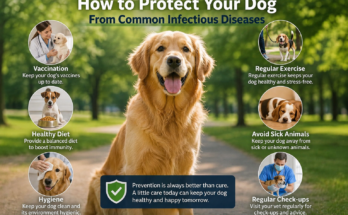
Preventing canine distemper requires more than vaccination alone. Dog owners should take practical steps to reduce the chance of exposure, especially when caring for young or unvaccinated dogs.
Avoid allowing unvaccinated puppies to interact with unknown dogs. Be careful when visiting places where many dogs gather. If you learn that a dog has been infected with distemper, keep your pet away from that animal and follow veterinary advice about exposure.
Good hygiene is also important. Shared bowls, bedding, toys, and other items should be cleaned regularly. If you have been around a sick dog, take appropriate hygiene precautions before handling your own pets.
Newly adopted dogs should receive a veterinary checkup, particularly if their vaccination history is incomplete or unknown. A veterinarian can help determine what vaccinations and preventive care are needed.
What Should You Do If You Suspect Distemper?
If your dog develops symptoms that could indicate canine distemper, contact a veterinarian promptly. Do not wait for the symptoms to become severe.
It is also important to keep a potentially infected dog away from other dogs. Because the disease is highly contagious, isolation can help reduce the risk of spreading the virus.
Tell the veterinary clinic about your concerns before arriving if possible. The clinic may have specific instructions for bringing in a dog that could have a contagious infection. This helps protect other animals and veterinary staff.
Never give human medications to a sick dog unless a veterinarian specifically tells you to do so. Some human medicines can be dangerous for dogs and may make the situation worse.
Can Dogs Recover From Canine Distemper?
Recovery from canine distemper depends on several factors, including the dog’s age, immune response, overall health, severity of infection, and whether the nervous system has been affected.
Some dogs recover with appropriate supportive care, while others may develop serious complications. Dogs that develop neurological signs may have a more uncertain prognosis.
Even after the main symptoms improve, owners should continue following veterinary instructions. Follow up appointments may be needed to monitor recovery and identify lasting problems.
Final Thoughts
Canine distemper is a serious disease that every dog owner should understand. The virus can spread quickly and may affect multiple body systems, causing symptoms ranging from fever and coughing to vomiting, diarrhea, muscle twitching, and seizures.
The good news is that canine distemper can often be prevented through proper vaccination and responsible pet care. Keeping vaccinations up to date, avoiding unnecessary exposure to unknown animals, maintaining good hygiene, and recognizing early warning signs can help protect your dog.
If you notice unusual symptoms in your dog, especially several symptoms occurring together, contact a veterinarian promptly. Early attention can provide important supportive care and may improve the chances of a better outcome. For dog owners, knowledge and prevention are two of the strongest tools for protecting a pet from canine distemper.